
Keynote Speaker
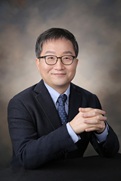
Prof. Sang-Wook Kim
Hanyang University, South Korea
Speech Title: Recommendation Systems:
Concepts, Techniques, and Applications
Abstract: These days, we
have a large number of online items around us, such as
products, content, and people, which makes users face
difficulties in choosing the items that they are
interested in. Good matching of each user to her/his
preferred items is important to enhance users'
experiences and companies’ profit, highlighting the
necessity of recommendation systems. The recommendation
system analyzes the characteristics of users’ past
behaviors and then predicts the items with which
individual users would be satisfied based on the
analysis result. In this talk, we first introduce
recommendation systems and discuss their key issues and
techniques. We start with the concept of recommendation
systems and introduce their real-world applications in
various business fields. Next, we classify
recommendation systems into three categories:
content-based, collaborative-filtering-based, and
trust-based approaches. Then, we describe a variety of
machine-learning techniques employed in recommendation
systems to provide users with better experiences.
Finally, we present the state-of-the-art techniques for
recommender systems recently developed at Hanyang
University and show their effectiveness and efficiency
with experimental results obtained via extensive
evaluation.
Biography: Sang-Wook Kim
received his Ph.D. degree in Computer Science from the
Korea Advanced Institute of Science and Technology
(KAIST) in 1994. In 2003, he joined Hanyang University,
Seoul, Korea, where he is currently a professor at the
Department of Computer Science & Engineering. He was
recognized as a distinguished professor at Hanyang
University in 2019. He has been a director of the
Brain-Korea-21 research program since 2014 and has also
been leading the SW STAR Lab Project since 2022. His
research interests include databases, data mining,
social network analysis, recommendation, and web data
analysis. From 2009 to 2010, Professor Kim visited the
Computer Science Department at Carnegie Mellon
University as a Visiting Professor. From 1999 to 2000,
he worked with the IBM T. J. Watson Research Center as a
postdoc. He also visited the Computer Science Department
of Stanford University as a Visiting Researcher in 1991.
He is the author of over 200 papers in refereed
international journals and international conference
proceedings. He served on Program Committees of over 100
international conferences, including ACM KDD, ACM SIGIR,
IEEE ICDE, IEEE ICDM, ACM WWW, and ACM CIKM. He is now
an associate editor of two international journals:
Information Sciences and Computer Science & Information
Systems (ComSIS). He received the Presidential Award of
Korea in 2017 for his academic achievement and has been
a member of the National Academy of Engineering of Korea
since 2019. He is a recipient of the Best Paper
Honorable Mention Award of ACM KDD 2025. He is also a
member of the ACM and a senior member of the IEEE.
Invited Speaker I
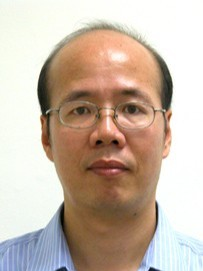
Prof. Chung-Chian Hsu
National Yunlin University of
Science and Technology, Taiwan
Speech Title: Traffic Volume
Prediction via An Explainable Deep Learning Model with
Variational Mode Decomposition and Multiple Temporal
Features
Abstract: Accurately predicting
short-term traffic flow is one of the key issues in
smart city management. With the rapid development of
deep learning technologies, an increasing number of
researchers have attempted to apply advanced time series
models, such as Long Short-Term Memory (LSTM) and Gated
Recurrent Unit (GRU) to traffic flow prediction to
capture its nonlinear dynamics and long-term dependency
characteristics. However, relying solely on deep neural
networks is still insufficient to fully overcome the
high variability inherent in traffic data. If the noise
in the data is not effectively addressed, the model may
misinterpret the data structure, thereby affecting
prediction accuracy and stability. As a result, data
preprocessing methods have been increasingly emphasized,
with Variational Mode Decomposition (VMD) being one
commonly used technique. VMD can decompose the original
time series signal into multiple Intrinsic Mode
Functions (IMFs) with different frequency
characteristics, which helps reduce noise, extract
primary trends, and enhance the model's ability to
understand the structure of time series data, thereby
improving prediction accuracy. Moreover, although deep
learning models such as LSTM and GRU possess excellent
capabilities for time series data modeling, their 'black
box' nature makes it difficult to explain the specific
contributions of input features to the prediction
results, limiting their trustworthiness in sensitive
application scenarios such as public policy and resource
allocation. Particularly in contexts that combine
multiple feature sources (such as temporal context,
historical flow, and variational mode decomposition),
the relationship between model inputs and outputs
becomes more complex. Without explanatory mechanisms to
assist, it can hinder subsequent feature optimization
and practical communication. Therefore, enhancing model
interpretability, analyzing feature contributions, and
clarifying the logic behind model judgments are also key
bottlenecks that need to be overcome in the field of
traffic flow prediction. To address these issues, this
study tackles the challenges of short-term traffic flow
prediction by introducing a deep learning framework that
integrates multiple feature sources with variational
mode decomposition and explainable artificial
intelligence techniques, aiming to improve the model's
accuracy and explainability. The multiple features are
divided into three main modules as inputs to the
prediction model: traffic and temporal information,
cross-day historical data, and traffic frequency
structures. The traffic and temporal module includes
features of traffic flow, time period, weekday, and
holiday. The cross-day historical data module consists
of traffic flow data from the same time points over the
past few days. The traffic frequency structure module
contains frequency sequences obtained through
variational mode decomposition. In terms of
explainability of the predictive model, we applied SHAP
(SHapley Additive exPlanations) technique. SHAP, as one
of the explainable artificial intelligence techniques,
has demonstrated advantages in various applications.
SHAP quantifies the contribution of input features to
model predictions, thereby enhancing the explainability
and transparency of the model, particularly in feature
impact analysis within deep learning models. This study
conducted experiments using a publicly available traffic
dataset from a city in central Taiwan. The results of
the ablation experiments indicate that, firstly,
incorporating temporal features such as "time period,"
"weekday," and "holiday" from the first module
significantly improves prediction performance,
demonstrating a high degree of complementarity. In
particular, using the Mean Absolute Percentage Error
(MAPE) as a metric, the baseline model that only
utilized traffic flow features achieved a MAPE of 17.23.
When the additional temporal information was included,
the MAPE dropped to 15.33, representing an 11.03%
reduction. Secondly, incorporating the cross-day
historical data from the second module further enhances
the model's ability to learn repetitive traffic
patterns, making the predictions more stable and capable
of capturing long-term dependencies. The MAPE decreased
to 14.64, representing a 4.5% improvement compared to
the performance achieved using only traffic and temporal
features. Thirdly, when the traffic frequency structure
from the third module is incorporated, the overall
prediction performance is further optimized. Using the
model with only the traffic and temporal modules as the
baseline, integrating with the cross-day historical data
module and the traffic frequency structure module
reduced the MAPE to 14.47, representing a 5.64%
improvement. Analysis of featuresimportance by SHAP
reveals that top ten important features among the 247
input features include the time point of the prediction
target (i.e., time t + 1), the time point t + 2, the
indicator of holiday or not at the time point of the
prediction target, the first and the second mode from
the intrinsic mode functions (IMFs) of the current time
point t, the first mode from the IMFs of the prior time
point t – 1, the traffic volumes at the same time point
t + 1 of one-day, two-day, three-day, and one-week prior
to the prediction day. Note that IMFs are the time
series data generated by variational mode decomposition.
In general, one common characteristic of the top ten
important features is that the time point of these
features are either the same with or close to the time
point t + 1 of the prediction target. The experimental
results verify that the proposed three-module integrated
framework exhibits robust error suppression
capabilities, significantly enhancing the overall
prediction quality and stability of the model.
Furthermore, through explainable artificial intelligence
analysis techniques, the quantification and
visualization of feature contributions are achieved,
assisting users in understanding the model's prediction
logic, thereby enhancing decision-making bases and
policy communication capabilities.
Biography: Chung-Chian
Hsu holds a Ph.D. in Computer Science from Northwestern
University, USA. Currently, he serves as a professor in
the Department of Information Management at National
Yunlin University of Science and Technology (NYUST) and
holds the position of Director of the Information
Division at the Foundation for Testing Center for
Technological and Vocational Education in Taiwan.
Previously, the speaker served as a Distinguished
Professor at NYUST, Chair of the Department of
Information Management, and Director of the
International Graduate School of Artificial Intelligence
at NYUST. He has received numerous accolades, including
the NYUST Outstanding Research and Development Award,
multiple Excellent Teaching Awards, and the National
Science Council's Special Outstanding Talent Award. The
speaker has collaborated on various academia-industry
projects with organizations such as National Taiwan
University Hospital Yunlin Branch, National Cheng Kung
University Hospital Yunlin Branch, Dalin Tzu Chi
Hospital, and WPG Holdings. His research interests
include Artificial Intelligence, Deep Learning, Machine
Learning, and Big Data Analytics. His research findings
have been published in top-tier academic journals,
including IEEE Transactions on Knowledge and Data
Engineering, IEEE Transactions on Neural Networks, IEEE
Transactions on Neural Networks and Learning Systems,
and ACM Transactions on Asian Language Information
Process.
Speakers for 2027 to be announced soon......